 |
 |
 |
 |
 |

This content was originally authored and published by Jack Whitham and has been reproduced with permission from the author, thanks Jack.
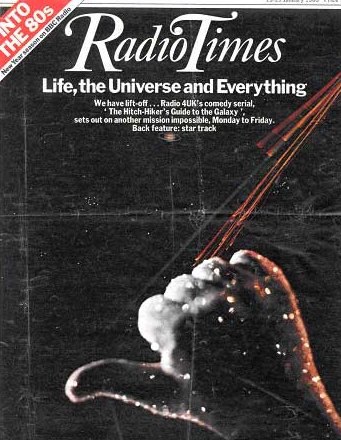
This web page is an archive of differences between the initial broadcasts of the famous "Hitch-Hiker's Guide to the Galaxy"
(HHGTTG) radio series, and the versions of those broadcasts now available on CD.
Revisions were made for a variety of reasons, some obvious, some more subtle.
The CD version has been compared against original off-air recordings and all of the differences documented.
Regarding this webpage. At the time, off-air recordings were made by a number of people. Using various forms of analogue tape, some high quality, these fans were able to preserve the episodes as originally broadcast. They proceeded to trade analogue copies with others who had missed the original broadcasts. This helped the show to become a cult favourite and guaranteed an audience for future HHGTTG-related material, such as books, records, the TV series and the fiendishly difficult computer game. Meanwhile, some of the episodes were revised slightly for repeat broadcasts. Some revisions were clearly performed to improve quality (see episodes 4 and 12), while others were done for copyright reasons (see episode 3). Dialogue was added and removed, scenes were re-edited and (in one case) deleted entirely. These revised versions were used for commercial CD releases of HHGTTG (e.g. series 1 from Amazon). They were also used for radio broadcasts, though interestingly enough, recent repeats on BBC Radio 4 Extra have returned to the original form of one episode. In one respect, these changes fit perfectly with the nature of HHGTTG, as every version of the Guide is different. The TV series, books and records do not share the plot of the original radio broadcasts; in fact, the plot of the books diverges so strongly from that of the radio series that the third radio series (produced in 2004, after Douglas Adams' death) was forced to disown all of the events of the second series as "an hallucination". The plot of the computer game is different again, and the least said about the movie the better.
However, none of these different versions can replace the original. Like an old series of Doctor Who, it has a special magic that is unique to that time and that production, an aspect that cannot be recaptured with Hollywood budgets and flashy audio/visual effects. The interest in restoring the original episodes was kickstarted by a repeat broadcast of the series on Jack's University's student-run radio station, University Radio York (URY). It was noticed that a piece was missing - the scene where the characters step out onto Magrathea. It's a piece that was distinctly remembered from hearing on the decades-old off-air recording that first introduced Jack to HHGTTG. The reason was simple. URY was broadcasting from the commercial CD release. Jack found the episode on the tape recording, digitised it, made a web page, then wondered what else might have changed. Various people contacted Jack since then, providing more information. Jack (and I) am grateful to these sources for complete sets of original off-air recordings and snippets from "A Tree Full of Secrets": most particularly the anonymous person who sent a CD of all twelve episodes in June 2009. Below you can read about the differences and hear sound clips. * A note about the source material.
Confidence is very high that the off-air recordings of series 2 used in this project are from the initial broadcasts.
Confidence is less high for series 1 as they may be taken from early repeats, and there is evidence that some scenes might already have been revised by that point.
If you have earlier recordings of the series 1 episodes, or know of differences that have not mentioned here, please consider getting in touch.
Finding the Differences(This section is full of technical detail so if you aren't really interested feel free to jump forward to the differences found in the episodes). One day, quite out of the blue, Jack received a complete set of off-air recordings by mail. They were the original episodes. Jack thought about how to share them with the world. Of course, putting entire episodes online would create a copyright problem, and there could be no "abandonware" justification as the CDs are still on sale.
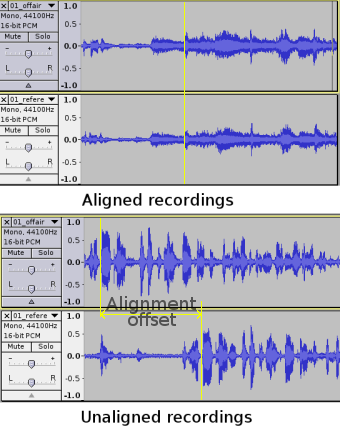
The interesting parts of the off-air recordings are the places where they differ from the CDs that you can buy. Jack set out to identify these places, ignoring all the material that is the same. By concentrating on these "abandoned" pieces of the episodes we avoid redistributing the material on the CDs. In this section we discusses the problems posed by this restoration project, along with the solution used, which combines computer analysis with human pattern recognition. ProblemsTake two sound recordings; one from the commercial CD release of HHGTTG and another from a recording of a radio broadcast. The two recordings contain the same episode, but there may be edits. Material may have been added, changed or deleted. The objective is to find these differences with accuracy and minimal effort. One method that is guaranteed to work is a manual comparison, e.g. listening to a scene from one recording, then the other. However, this is painstaking and error-prone. If the two recordings were digital, it might be possible to locate differences using a program (e.g. diff). However, the recordings are sourced from analogue tape. Although they sound the same to a human, they are composed of totally different digital data. The biggest problem is that the recordings are not aligned. When recordings are aligned, events in one recording happen at exactly the same time in the other.
However, these recordings are not aligned, and aligning them is not simply a matter of determining the alignment offset (right) required to synchronise one with the other. This is because one is slightly faster than the other, so the alignment offset changes during each recording. Worse still, the relative speed also changes, so the alignment offset changes in a non-linear fashion. Therefore, you can't align two recordings together by finding the alignment offset at the beginning and end. The change of speed happens because of imperfections in the recording technology. Analogue tape recorders attempt to ensure that tape moves at a constant speed. The mechanism that does this is very accurate, assuming decent equipment is used, but it is not exact. When a recording is copied many times, tiny inaccuracies accumulate: each inaudible in isolation, but very noticeable when added together. There were differences in speed in every pair of recordings listened to. Aligned recordings can be compared in two ways. Firstly, a human could listen to both recordings at the same time, one playing in the "left" channel of a stereo system, the other in the "right" channel. The result is mono sound when the recordings are identical; differences are immediately obvious. Secondly, if the synchronisation is perfect and the amplitude of both recordings is the same, then one recording can be subtracted from the other. The result is silence when the recordings are identical and a mixture of both recordings when they are not. How to Align and Compare Two Analogue RecordingsAlignment and comparison would be easy if there was an analogue equivalent of the diff tool, which compares text files. Others have realised a need for such a tool. "Audio Diff" has been considered as an extension for the excellent Audacity sound-manipulation software. However, this is only a proposal. It seems there is no code yet.Music Alignment Tool CHest (MATCH)
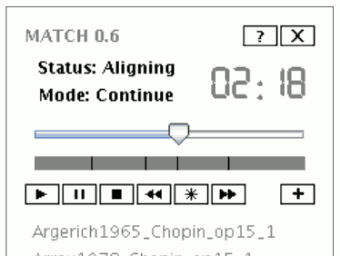
The authors of the Audacity web page give a number of useful hints. Firstly, some software has already been written to align analogue recordings. The Music Alignment Tool CHest (MATCH), is a program written by music researchers to align sound files automatically. While the alignment process requires substantial CPU time and memory, the results are quite accurate and no human intervention is required. There is an interesting research paper about MATCH here, backup copy here. MATCH can produce "session files", aligning points in one sound file to another.
Experimentation with MATCH was done for some time, but found some difficulty using it to synchronise the HHGTTG episodes.
It is not well-suited to detecting differences, as it assumes the input files are the same.
It is also intended for music, and it seems that some parts of HHGTTG, particularly the quieter periods,
the voice acting and the weird sound effects can defeat its alignment algorithm.
Additionally, it was not clear how its algorithm worked, as it is closed-source, and the research papers concentrate on results and music theory instead
of algorithms.
Dot Plots
Another hint from the Audacity web page was the suggestion of the use of
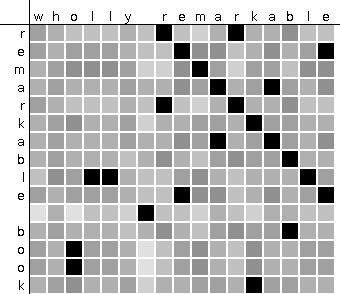
dot plots to compare recordings. In the following example, X and Y will be strings composed of text. This is what a programmer will assume you mean if you say "string" - but bear in mind that a string might be composed of any sort of data, including audio samples. Let X = "wholly remarkable", and Y = "remarkable book". Within the dot plot, the colour of every point (x, y) is defined by the difference d(x,y) = X(x) - Y(y). d(x,y) is zero if there is an exact match. In the example on the right, zero is drawn as black. Diagonal lines appear within the dot plot whenever a chain of matches occur close together. One such diagonal line is visible in the corner of the dot plot, where "remarkable" occurs in both X and Y. This is not the only match; for example, "l" in "wholly" matches "l" in "remarkable", resulting in more black squares. But "remarkable" is the only sequence of matches. The black diagonal line stands out within the noise of inferior matches. Using it, we can match X(7) to Y(0), X(8) to Y(1) and so on. That is, the dot plot allows us to align the two strings. In this case, the alignment offset is 7.
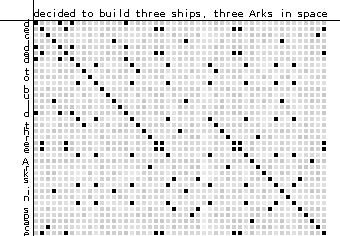
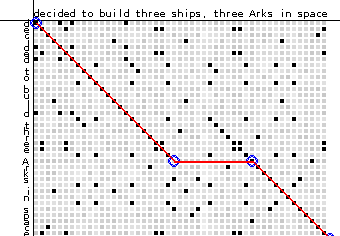
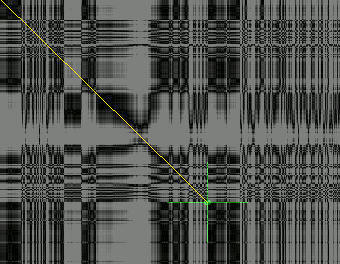
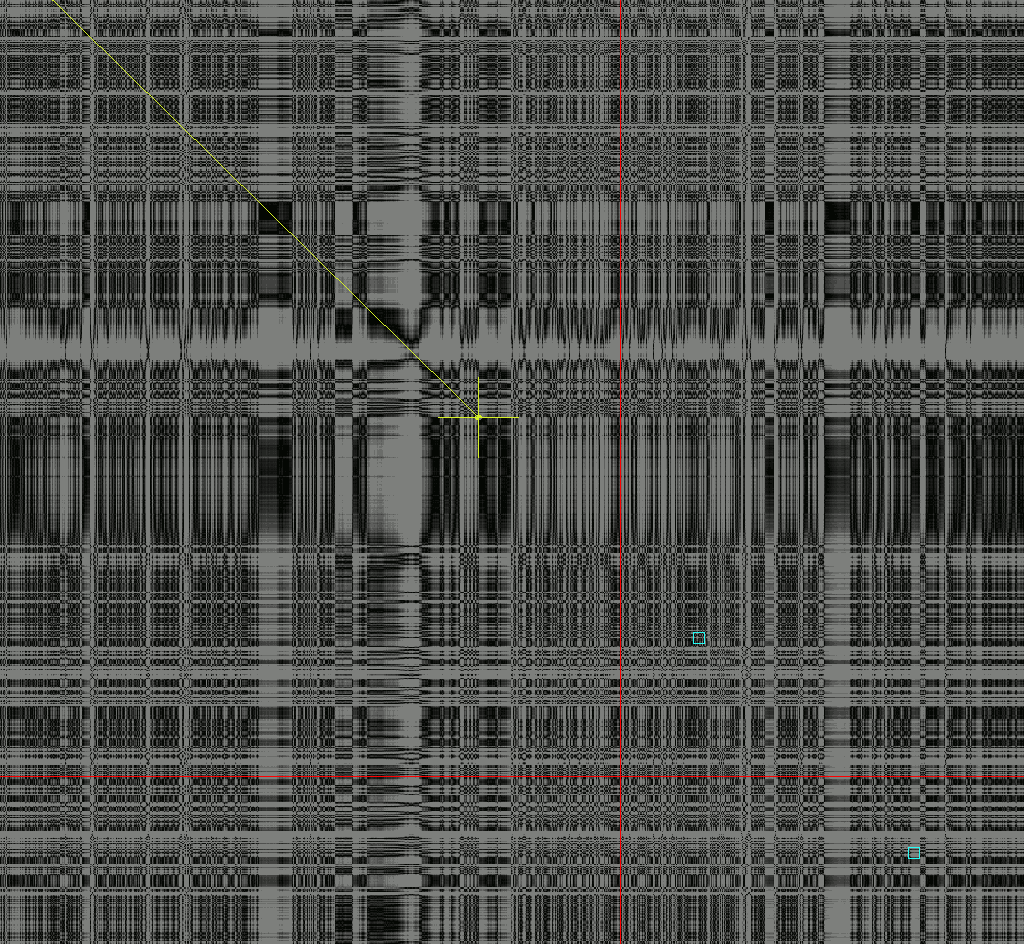
Dot plots make it possible to visualise this similarity even on a much larger scale, with much longer strings - such as entire audio files. The dot plot also shows where edits have taken place. Suppose that X = "decided to build three ships, three Arks in space". This is then edited to produce Y = "decided to build three Arks in space". The black diagonal line (right) is broken at the point of the edit; it resumes some distance to the right. The dot plot allows us to both align the strings and mark the places where alignment is impossible, because something has been edited out. Similarly, an edit might insert something entirely new. This would cause the black diagonal line to disappear completely, resuming elsewhere in the dot plot. In summary, dot plots are an ideal way to both align the audio files and find the places where an off-air recording differs from the commercial CD release. Aligning EpisodesDot plots work well for much more complicated strings, such as the sound recording of a complete episode of HHGTTG. Jack experimented with many different ways of producing the dot plots, and eventually settled on the following process:
Finding Differences
Then, Jack loaded the two aligned recordings side-by-side in Audacity and routed one to the left channel, and the other to the right. Jack was now able to listen to both playing at the same time. This provided a final check to ensure that I hadn't missed any differences while working with the dot plot. The result was a distinctive mono sound when the recordings matched. The alignment was usually exact: slight losses of alignment manifested themselves as a faint phasing effect. The following sections talk about the differences that were actually found. There was no difference in either episode 1 or episode 2, which is strange as at least one line of monologue concerning the worst poet in the Universe did subsequently lead to legal problems, and thus it is rather surprising that it is still intact. Episode 3 - Fit The ThirdIn Episode 3, the starship "Heart of Gold" arrives in orbit around the legendary lost planet of Magrathea. The protagonists are attacked by an ancient computer system, but effect an improbable escape. They land on the planet and prepare to step out onto the surface. The door opens, and then... Scene missing! What Changed?A scene was deleted.
Approximately 75 seconds of material were edited here: these sound clips contain 10 seconds of audio at the beginning and end of the edited section to provide some context. The script of the missing scene is also available and in this section instructions for those wishing to restore the scene to a commercial CD release of HHGTTG. History
The scene was deleted because of the backing music used within it. Most of the music in the first series of HHGTTG is commercial, taken from albums by Jean Michel Jarre, Ligeti, Terry Riley and various others. Adams explains (in the introduction to the script book) that: "I wanted Hitch-Hiker's to sound like a rock album. I wanted the voices and the effects and the music to be so seamlessly orchestrated as to create a coherent picture of a whole other world."This sounds very exciting and Adams even attempts to explain what it means: "Though it was now ten years since Sergeant Pepper had revolutionised the way that people in the rock world thought about sound production, it seemed to me, listening to radio comedy at the time, that we still hadn't progressed much."Adams had some idea about how he wanted each part of the script to sound, and for the surface of Magrathea, that would be Pink Floyd: specifically, the beginning of their classic album "Wish You Were Here". Perfect backing music for "an alien world, millions of light years from home". Adams cleared the inclusion of the piece with Pink Floyd, who just happened to be old friends of his.
Alas, a gentleman's agreement is not a copyright licence, and the scene was cut for subsequent repeats and commercial releases. However, the scene did not disappear entirely, because it reappears in a modified form on the HHGTTG record, where Marvin really does "hum like Pink Floyd" rather than hum exactly Pink Floyd. Like all of the other music featured on the record, it is an original composition by Tim Souster and Paddy Kingsland. In my view, its presence on the LP is an admission that the producers of the show did not wish to cut it, particularly as other material had to be removed to fit on the limited medium of four LP sides. The running time of one side of an LP is usually between 22 and 25 minutes, compared to the 28-30 minute running time of a radio episode. Scene Restored!In April 2014, several years after Jack first created his original webpage on this subject, Jack received an email to say that a complete broadcast of episode 3 had been aired by BBC Radio 4 Extra. Jack listened to the broadcast, and indeed, the email was correct - the missing scene had been restored! Someone at the BBC was aware of the difference, and had thought it important enough to find the unedited version rather than simply playing the CD. The quality was also excellent, with no obvious transition between the "deleted" part and the rest of the episode. It is expected that this restored version will be used for future broadcasts, so if you are interested in hearing the whole thing, visit the
iPlayer page from time to time to see if it is available for streaming.
In Episode 4, Trillian's white mice buy dinner for the
protagonists in order to make up for attacking them with a
fantastic Dismodulating Anti Phase Stun Ray. Over dinner,
they chat about the Ultimate Question of Life, the Universe
and Everything, and the difficulties posed by appearing on a 5D TV
chat show when you have nothing of interest to say.
The voice treatment on the mice was changed. To do this, their dialogue
was re-recorded by different actors. The script changed slightly along
with the background noise for the scene.
The script shows where changes were made to the dialogue. Some of the lines originally given to one mouse were given to the other, and various small edits were made to the surrounding dialogue. Because the actors playing the mice were changed (originally Jonathan Adams and Jeremy Brown, subsequently Peter Hawkins and David Tate), the episode credits also had to be re-recorded, thus:
History
The original directions for this scene say: Not quite certain about the voice treatment here. Obviously it has to suggest mouse-likeness, but it shouldn't sound silly, as they are actually quite relaxed and sophisticated mice. It's clear that Douglas Adams and producer Geoffrey Perkins were unhappy with the original effects used in this scene. Perkins wrote: ...we originally attempted to create the effect by having the actors speaking normally and then using the harmoniser to turn them into squeaky rodents, but the result was both too mechanical and also difficult to understand... For the re-make we got the actors to record the lines very slowly, doubled the speed and then harmonised them slightly down. The differences described on this page are a result of this revision. The lines of the other actors were not re-recorded, and the mice effects are greatly improved.
Perkins also notes that some people wrote in to complain, saying that they preferred the original version. Part of the issue may be that the personalities of the mice also appear to change. Although greedy in both versions, the mice are not as unpleasant to Slarti in the revised version. Their personalities change yet again for the LP version. In that version, rather than simply ask Arthur and Trillian to "find the question", they attempt to buy Arthur Dent's brain from Zaphod, replacing it with a computer programmed to say "What?" and ask "Where's the tea?" The background effects were also revised. In the original, the mice and protagonists appear to be eating in a busy restaurant; you can hear other voices in the background, including children. This seems rather out of place for a scene that's supposed to take place on a lost planet, even a legendary one. The revised version replaces this with a much quieter background with only an occasional clatter of plates or cutlery. Episodes 5 through 11No differences were found in the recordings for episodes 5 through 11;
the commercial CD release is exactly the same as the off-air recording (although higher quality).
The next set of changes are in episode 12.
Episode 12 takes place on Planet Brontitall.
As the episode begins, Ford and Zaphod discover an extremely delayed Transtellar Spacelines flight,
while Arthur and Lintilla escape from the evil shoe corporation executive Hig Hurtenflurst.
Some scenes of this episode were remixed
and re-edited after its initial broadcast.
History
Geoffrey Perkins writes: The final show in the series very nearly didn't make it on the air. Although the actors were recorded on 13 January the actual mixing of the show was all done on the day of transmission, completed some twenty minutes before it was due to go out and then spirited in a fast car down one of London's busiest roads... to BBC Broadcasting House, where it arrived just a few minutes before transmission. Keen eared listeners might have noticed that some scenes were remixed for the subsequent repeats, since at the time we had no time to do anything on the last scene but add a little rain and some cat impersonations. In fact, most of the episode changed subtly, not just the last scene. The list of changes given above does not include very minor edits that permeate the episode, such as tightening of pauses in dialogue. None of these seemed sufficiently interesting to merit inclusion here. Similarly, the scene with the Allitnils was clearly remixed to avoid obscuring dialogue with gunfire sound effects; I have found several instances where gunshots were moved so that the actors could be clearly heard. However, the content of the episode is entirely unchanged by this process. The interesting changes occur while Ford and Zaphod are on board the Transtellar Spacelines ship, during Marvin's autobiography, and during the final scene with the man in the shack. Transtellar Spacelines shipIn the original version, the audience stays with Ford and Zaphod as they move through the ship. When the android stewardess awakens the passengers, Ford and Zaphod run for their lives. They pass through several automatic doors and down a corridor before arriving directly on the flight deck.
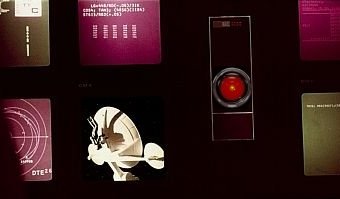
The revised version transitions directly between one area of the ship and another using a crossfade, perhaps because Arthur has already spent most of this episode running from the footwarriors, and listening to somebody running does not make for particularly interesting radio. It adds more noise from the passengers, and an alarm clock sound effect is added just before the passengers awake, and somehow Zaphod has a sense of what is about to happen, because he cries "Run, man!" just before the passengers begin to screech. This works well and adds to the horror of the scene. The two find that the autopilot will not be reasoned with. It begins chanting "Return to your seats". Ford and Zaphod decide to find the first class cabin. In the original version, the pair run through another series of automatic doors, and the voice of the autopilot fades into the background. It is talking to itself on the flight deck, repeating "Return to your seats" ever more insistently; an insane computer in the best tradition of HAL. The revised version does something quite surreal here, even by HHGTTG standards. The voice of the autopilot begins to echo and pans around the stereo picture. It fades and becomes more and more metallic. There is another fadeout, and the pair arrive at the first class cabin. Marvin's AutobiographyMarvin deals with Poodoo and the priest by playing them a tape of his autobiography. A few lines were cut in the revised version as Marvin complains that he "didn't ask to be made". "Reality is on the blink again"Zarniwoop collapses the artificial Universe, and a few lines of dialogue from other parts of the series are heard again as reality tears apart. This is a curious sequence; it does not appear in the script book, and yet it must be important, since it was extended for the revised version with the following lines: POODOO What we did, you see, is we flew in. ZARNIWOOP Here's to your achievement, Zaphod Beeblebrox. ZAPHOD Achievement? Oh, yeah. These new lines were spliced in without remixing the earlier parts of the sequence, as evidenced by the particularly harsh edit just before Poodoo speaks. Clearly this sequence was felt to be worthy of extension, and it certainly adds to the already high level of universal uncertainty and paranoia found in the final episode. The Man in the ShackIn this final scene, the protagonists finally meet the man who Zaphod and Zarniwoop have been trying to find all along. At the beginning of the scene, the revised version adds more rain and thunderstorm effects and cuts one line where the man is talking to his cat: "Pussy think, eat fish or not fish." The end of the scene (and the end of the series) plays out faster in the revised version. In the original version, Ford spends about ten seconds calling for Arthur, but the Heart of Gold is long gone by that time. In the revised version, Ford and Zaphod see the ship leave. Minor ChangesEpisode 12 has many minor changes where pauses have been tightened and dialogue has been made clearer. None of these seemed sufficiently interesting by itself to appear here, although it would be possible to group many small changes together as a revised scene (as in the case of the scene with the Allitnils). In the next section there is a description of how you can restore the episodes to their original form. There are two ways of doing this: either by hand or by using a program which Jack wrote and is available here. The program has the advantage that it can make a large number of changes without human intervention. Therefore, it restores more sections of episode 12 than I have listed here, containing minor edits. ConclusionThe comparison of the off-air HHGTTG records and the commercial CD release reveals that the two are largely the same. Revisions were made in only three out of twelve episodes. In two cases, these only affect a single scene in each episode. The exception is the final episode, where changes are widespread. The amount of material that was lost is, fortunately, quite small. Nine episodes remain, to the best of my knowledge, entirely unchanged. As a long time fan of the original version of HHGTTG, I must comment that most of the revisions were an improvement. The exceptions are the Magrathea scene, now restored by the BBC, and the changes to the autopilot's voice (see above). It is also a shame that some of Marvin's autobiography was removed, as Marvin is awesome. However, the mice are improved on the commercial CD release. The Allitnil scene is clearer, the passenger cabin more horrifying, and the final scene with the man in the shack sounds better. Thanks go to a number of people for contributing to this project.
What you need1. The commercial CD release. You really need to own the commercial CD release of HHGTTG: series 1, and series 2. As far as we know, all of the CD versions are the same, so an earlier edition will be just as good. 2. A good sound editing program. A recommendendation is for you to use the free program Audacity, which is a non-linear sound editing program. Other software is available and suitable, and if you happen to be a professional musician or editor, you will no doubt already have even better editing programs on your computer. But if you are not an expert, Audacity is a good bet. 3. A CD ripping program. You need this to copy the sound files off the commercial CDs.
CDex
will do this for you if you use Windows.
On Linux you can use
cdparanoia or
grip.
On MacOS, it is understood that iTunes has the required functionality. Restoring Episode 3 by handOne scene is missing from Episode 3. To restore it, you must first copy Episode 3 from the commercial CD. (It's on CD 2 of the "Primary Phase".) Try to copy the entire episode as a single audio file. Open this file in Audacity. This is how it should look: 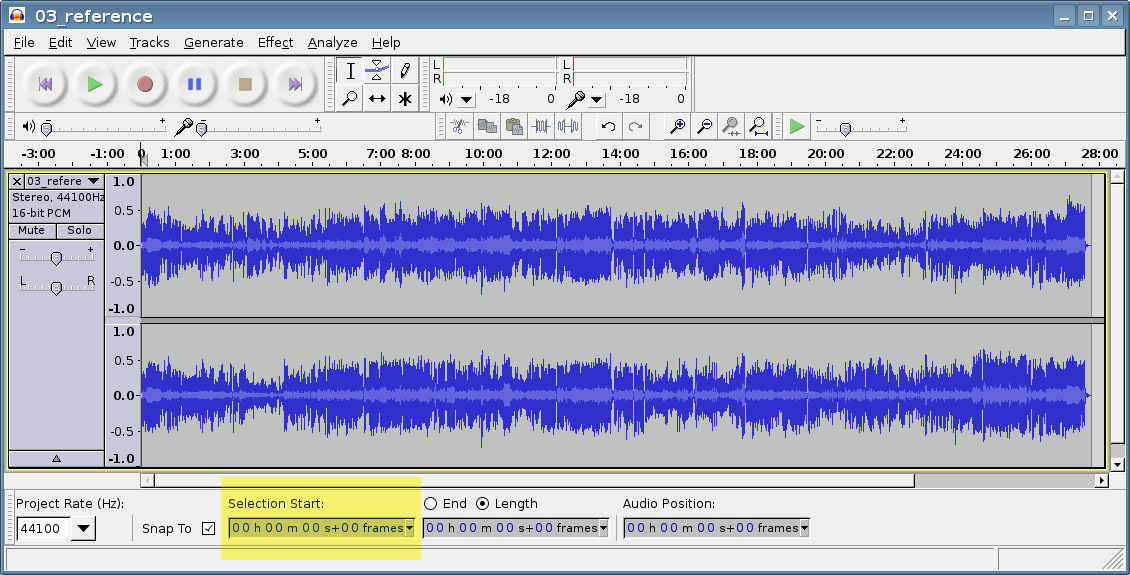 Click "Selection Start" (highlighted in yellow) and select "hh:mm:ss + milliseconds". This ensures that Audacity will use minutes, seconds and milliseconds to identify positions within audio files. Also, click the circle next to "End". Now, download the "original version". It is a file named "magrathea-original.mp3". Here is the relevant data.
Next, select File -> Import... -> Audio... You will now see two tracks in the editor. Select all of the shorter track ("magrathea-original") and choose Edit -> Cut. All sound data in the shorter track should disappear. Select the first track, and then click on the Selection End box. Enter the end point: it is 16 minutes, 31 seconds, and 721 milliseconds according to the information above (16:31.721). Next, click on Selection Start box. Enter the start point: it is 16 minutes, 8 seconds and 742 milliseconds (16:08:742). Now you should see something like this: 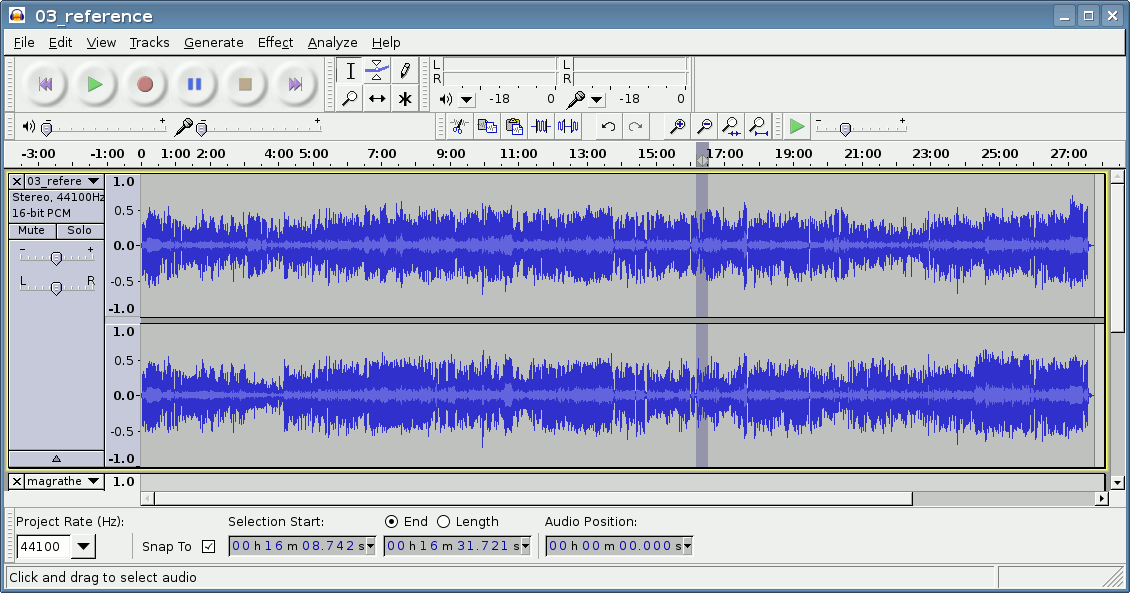 Select Edit -> Paste. A section of the file is replaced: 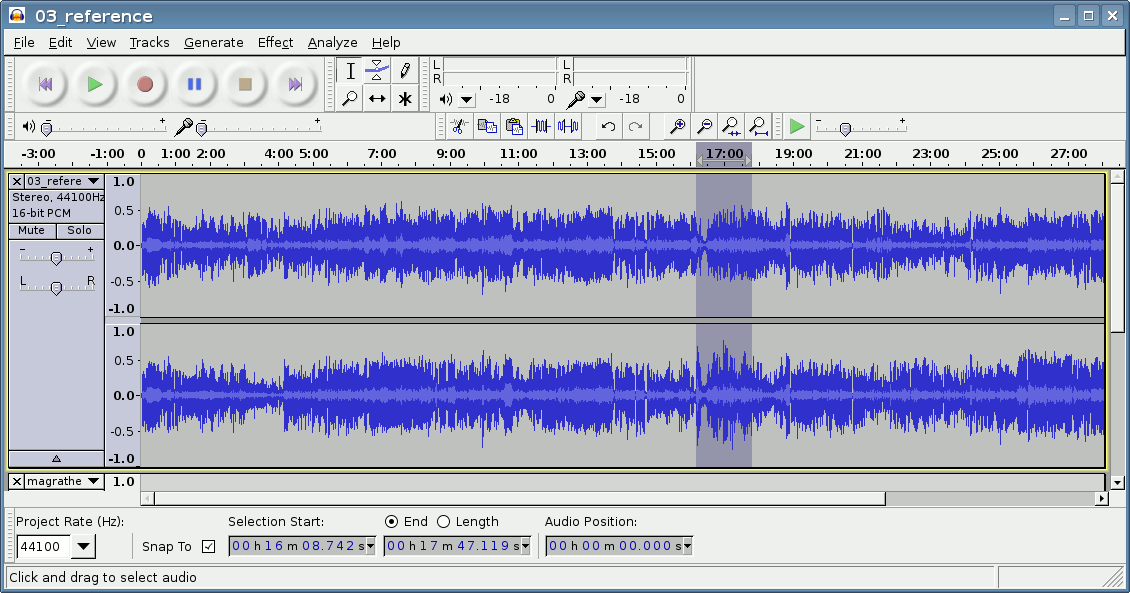 That's it! The original scene has been restored to episode 3! You can now use Audacity to listen to the episode, or to export an MP3 or WAV file to keep. Notice that you did not need the "CD version" MP3 file, or the location of the scene in the original episode (ending at 17:47.077 in this case). That information is just there so you don't need to dig out your commercial CDs in order to make a comparison. Restoring Episode 4 and Episode 12The procedure for restoring scenes in Episodes 4 and 12 is identical
to that described above. The replacement audio clips can be found
on the pages for each episode, 4 and
12, along with the start point and
end point information that you need. Download the "original
version" MP3 file and paste it over the "CD version" location in Audacity. Experimental: Restoration ProgramIn 2009, Jack wrote a program to do the restoration work automatically.
It's still available here, but now (2015) it is uncertain that it will be particularly
helpful to you, as the instructions are quite out of date, and one suspects
anyone would struggle to follow them. Though a program may remain the same, the
environment in which it runs will change as a result of upgrades,
and without regular maintenance the program becomes unusable. However, if you are up for a challenge, here we go. The program
will only run on a Linux computer, and it requires two programs
to be installed: wget and mpg123. These are (were) found on most
Linux systems, and if they're not already on yours, you can install them using
your package manager (e.g. APT). You can extract the episodes from
the commercial CDs using "cdparanoia". (That's the setting for episode 12 on the edition of the commercial CDs tried; it occupies tracks 12 through 20.)cdparanoia -- 12- 12.wav When you have 03.wav, 04.wav and 12.wav, Run it as follows: python reprocess.py patch It should do everything for you automatically.
It will fetch the MP3 files from this website (maybe) and patch them into the WAV files as appropriate,
restoring the episodes as originally broadcast.
They will be called 03_original.wav, 04_original.wav, and 12_original.wav. Enjoy!
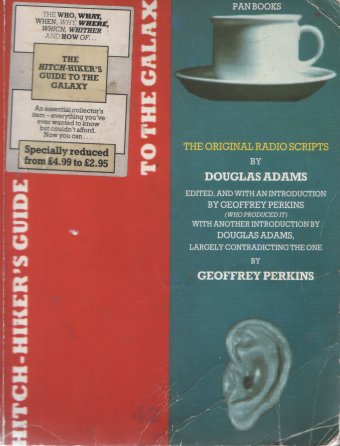
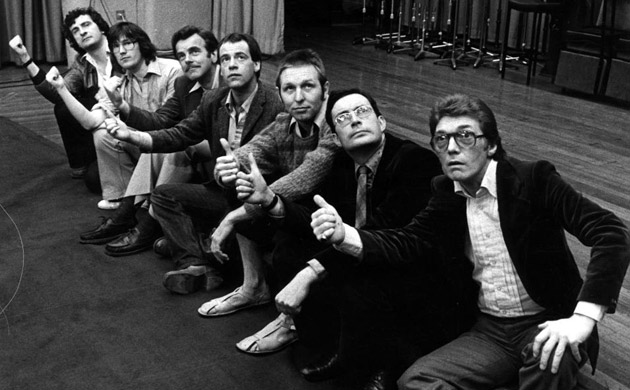
Reference a Guardian article from September 2008 "Geoffrey Perkins: a career in pictures". Naturally, the people involved in producing the Hitch-hiker's Guide radio series in the first place deserve the most credit for everything related to HHGTTG. You can read about these incredibly talented people here. However, on this page, special mention should be made to the people who directly contributed to this restoration project. These begin with Jack's Dad, Peter Whitham, who first introduced Jack to Hitch-hikers. (The show was broadcast before Jack was born.) The first off-air recording published on Jack's website - the missing Magrathea scene - came from one of his old tapes. Sadly the quality was quite poor; the Compact Cassette was never a high fidelity format. The copy of the scripts book used here (a first edition) also belongs to him. Once that first scene was online, Jack started to get occasional emails from other HHGTTG fans who had found the webpage, often asking for further information about other episodes, which one hopes have now been answered! The first major contribution to the restoration project was from Andrew Rodland, who informed Jack that the scene could be found on a Pink Floyd bootleg known as "A Tree Full of Secrets", and was kind enough to send an MP3. This was shorter than the original recording (missing some dialogue) but the quality was vastly improved. It was used to improve the files put on the web.
The second major contribution was a complete set of off-air recordings, sent to Jack by an anonymous person. Unfortunately as a result of this anonymity one cannot thank him or her by name, as he or she specifically left no name due to fear of copyright infringement reprisals. (This is avoided here by uploading only short samples of the episodes which are useless without the commercial CD release.) The accompanying letter explained that the recordings had been stored on VHS tape for many years (the "hi-fi stereo" VHS audio track was commonly used for audio recording during the 1980s, as it came close to CD quality). The tape had recently been digitised and edited into twelve MP3 files. The anonymous source added: I'm pretty sure that most of the episodes are from the original radio transmissions. (That's definitely true for the second series where the original tapes have continuity announcements with some dates.) There are a few that I missed first time round where I had to fill in the gaps...but most are originals.At first Jack thought very little of this, since episode 3 and episode 4 are from the initial broadcast, and episodes 1 and 2 match another off-air recording from an entirely different source. But then, David James got in touch by email to point out additional differences in episode 2, in the scene following the news broadcast ("Has the Big Z finally flipped?" / "Zaphod's just zis guy, you know?") His email suggests that this scene might have been re-recorded between the initial broadcast and an early repeat, since no difference was found. Thanks also should go to Gordon James and Mike Le Voi who wrote to Jack with additional information about the broadcasts, and the writers of the excellent non-linear sound editor Audacity, LAME and the SoX tools, which have been invaluable. Others have emailed over the years, too many to list. Lastly thanks should go to the BBC for both producing the series in the first place and for restoring the missing scene from episode 3 in recent repeats.
<< Back
|
| | |||||||||||||||||||||||||||||||||||||||||||||||||||||||||||||||||||||||||||||||||||||||||||||||||||||||||||||||||||||||||||||||||||||||||||||||||||||||||||||||||||||||||||||||||||||||||||||||||||||||||||||||||||||||||||||||||||||||||||||||||||||||||||||||||||||||||||||||||||||||||||||||||||||||||||||||||||||||||||||||||||||||||||||||||||||||||||||||||||||||||||||||||||||||||||||||||||||||||||||||||||||||||||||||||||||||||||||||||||||||||||||||||||||||||||||||||||||||||||||||||||||||||||||||||||||||||||||||||||||||||||||||||||||||||||||||||||||||||||||||
© David Hodgkinson 2026